Are ceiling mics enough for university classrooms?
Ceiling microphones can help cover the room, but they do not always deliver the clarity instructors, students, and remote participants need.
Published: July 10, 2026
Ceiling microphones for university classrooms can be a good solution for room coverage. They help capture voices without requiring every person to handle a microphone, and they can make hybrid classes, recordings, and student Q&A easier to manage.
But are ceiling microphones enough for classrooms on their own?
Usually, no.
Ceiling microphones work best when they are part of a larger classroom audio strategy. They can capture general room sound, but they are not always the best choice for the person speaking most often: the instructor. In most classrooms, the teacher does the majority of the talking. That means the first priority should be clear, close-proximity instructor audio.
This is where a system like Catchbox Plus becomes useful. It can work alongside ceiling microphones, replace them in rooms where ceiling installation is difficult, and simplify audio for AV and IT teams managing multiple spaces.
For more background on the limitations of ceiling microphone systems, you can also read: The Problem with ceiling array mics.
Ceiling microphones work, but they do not solve every classroom audio problem
A ceiling array microphone classroom setup can be attractive because it keeps microphones out of sight. There are no handheld devices to pass around, no wearable mics to distribute, and no visible cables on desks or lecterns.
For flat classrooms, seminar rooms, and spaces with predictable seating layouts, ceiling microphones can do a solid job of capturing student questions and general discussion. They are especially helpful when students speak from different parts of the room and the AV team wants a clean, fixed installation.
But ceiling microphones also have limits.
The biggest issue is distance. A microphone mounted in the ceiling is rarely close to the person speaking. The farther the microphone is from the voice, the more it captures room noise, reflections, HVAC sound, chair movement, laptop typing, and other unwanted audio.
That can create common classroom ceiling microphone problems, including:
➔ Muffled or distant speech
➔ Uneven pickup from different seats
➔ Poor student Q&A clarity
➔ Room echo in recordings
➔ Weak audio for remote participants
➔ Complicated installation in lecture halls
➔ Inconsistent performance across different room shapes
Ceiling microphones are not bad. They are simply not magic. They provide coverage, but coverage is not the same as clarity.
Why close-proximity microphones usually sound better
The clearest audio usually comes from placing the microphone close to the person speaking.
That is why TV presenters, lecturers, performers, and conference speakers often use wearable, handheld, or podium microphones. The mic is near the voice, so it captures more speech and less room noise.
This matters in university classrooms because the audio needs to serve several use cases at once:
➔ Students in the room need to hear clearly.
➔ Remote students need intelligible audio.
➔ Recordings need to be usable later.
➔ Assistive listening systems need clean speech.
➔ AV teams need a setup that works without constant support.
When comparing ceiling microphones vs wireless microphones, the difference often comes down to proximity. Ceiling microphones are convenient for broad pickup. Wireless microphones are usually better for the main speaker because they stay close to the source.
That does not mean every student needs a wearable microphone. It means the people speaking most often, especially instructors, should be captured with a close-proximity mic
The teacher speaks most: So start with instructor audio
In a typical classroom, most of the speaking time comes from the instructor. So the best place to improve classroom audio is usually the instructor microphone.
A ceiling microphone may capture the teacher, but it often captures them from several meters away. If the teacher moves around, turns toward a whiteboard, walks between desks, or speaks while facing away from the ceiling array, audio quality can become inconsistent.
A close-proximity instructor mic solves this problem directly.

With Catchbox Plus, universities can use:
➔ Catchbox Clip as a wearable presenter microphone
➔ Catchbox Stick as a handheld presenter microphone
➔ Catchbox Cube as a throwable audience microphone
➔ Catchbox Hub as the receiver, DSP, mixer, and integration point
The Hub supports analog, USB, and Dante® interfaces, making it easier to connect instructor and audience audio into one clean system. For hybrid teaching, the room can send a single processed USB audio feed to the conferencing device.
This makes the setup easier for instructors and easier for AV teams to manage.
Option 1: Combine ceiling mics with Catchbox Clip or Stick
The strongest setup is often not ceiling microphones vs throwable microphone or ceiling microphones vs wireless microphones. In many university classrooms, the best answer is both.
Ceiling mics can provide room coverage. Catchbox Clip or Stick can provide clear instructor audio.
This setup is especially useful when the classroom already has ceiling microphones installed. Instead of removing them, universities can combine them with Catchbox Plus through the Catchbox Hub.

A practical setup could look like this:
- Existing DANTE® ceiling microphones capture student questions and room discussion.
- Catchbox Clip or Stick captures the instructor at close range for clear, consistent speech.
- Catchbox Hub DSP automixes and processes the Catchbox and ceiling microphone audio, then sends the combined signal to the video-conferencing platform over USB.
- Far-end audio is routed back through the Hub DSP and played through DANTE-enabled classroom loudspeakers.
 This gives universities the best of both worlds: ceiling coverage plus close instructor clarity.
For AV and IT teams managing classrooms, this matters. A classroom audio system should not create daily support tickets. It should be reliable, repeatable, and easy to monitor.
Catchbox Plus is designed for that kind of environment, with robust license-free DECT operation in the 1.8 to 1.9 GHz band, remote control options, Dante support, and simple microphone charging.
Option 2: Use Catchbox Cube when ceiling mics are hard to install
Sometimes ceiling microphones are not practical.
A university may not be able to install them because of ceiling height, building restrictions, acoustic challenges, budget, construction timelines, or room shape. In other cases, the space may be temporary or frequently reconfigured.
This is where Catchbox Cube becomes a strong ceiling microphone alternative.
Instead of trying to capture student questions from the ceiling, the Cube brings the microphone directly to the person speaking. Students can pass or gently throw the throwable microphone across the room, making Q&A more natural and much clearer for remote listeners and recordings.
This is especially helpful in lecture halls where students are spread across a wide area. A ceiling microphone for student Q&A may struggle when the distance between the ceiling and each student varies a lot. In an amphitheater-style hall, some students may be close to the ceiling while others are much farther away. That creates uneven pickup.
With Catchbox Cube, the microphone moves to the student. That improves proximity and makes student questions easier to hear.
You can read more about this approach here: Catchbox as a ceiling mic alternative.
Book a quick online demo
Pick a time that works best for you, and we’ll walk you through the system in action. We’ll also discuss your specific setup, answer any questions, and show how Catchbox can fit into your space.
Flat classrooms vs amphitheater lecture halls
The right classroom audio setup depends heavily on room design.
In a flat classroom, ceiling microphones can work well. The ceiling height is often consistent, the students are usually at a similar distance from the microphone array, and the acoustic environment is more predictable.
For example, a flat classroom can successfully use ceiling microphones for general student coverage. When paired with a close-proximity instructor mic like Catchbox Clip or Stick, the room can support lectures, student Q&A, recordings, and hybrid participation.
Amphitheater lecture halls are different.
In a lecture hall ceiling microphone setup, the distance between the ceiling and each speaker can vary significantly. Students in the front rows may be much farther from the ceiling than students higher up in the room. The instructor may move across a large stage or teaching area. Reflections and room noise can also be more noticeable.
That makes a lecture hall ceiling microphone harder to design and configure.
In these spaces, Catchbox Cube can be a better option for student participation. It solves the proximity problem by placing the microphone near the student who is speaking. Catchbox Clip or Stick can then handle the instructor.
For many lecture halls, that setup is simpler, more flexible, and easier to scale.

Ceiling mics vs Catchbox Plus: Which setup is better?
The answer depends on what problem you are solving.
Ceiling microphones are good for room coverage. Catchbox Plus is better for clear, close-proximity speech capture, especially when instructors and students need to be heard clearly in hybrid classes, recordings, and voice lift systems.
Here is a simple comparison:
Ceiling microphones only
Best for: Basic room coverage in flat classrooms
Ceiling microphones can capture general discussion without requiring students to handle a microphone. However, speech may still sound distant or uneven and can be affected by room noise, reflections, and the distance between the microphone and the speaker.
Ceiling microphones with Catchbox Clip
Best for: Clear instructor audio alongside existing room coverage
This is a strong option for classrooms that already have ceiling microphones or plan to install them. The ceiling mics capture wider room discussion, while Catchbox Clip keeps the instructor’s voice close, clear, and consistent as they move around the room.
Ceiling microphones with Catchbox Stick
Best for: Lectures, panel discussions, and instructor-controlled audio
Catchbox Stick gives the presenter a reliable close-proximity microphone while the ceiling microphones cover the rest of the room. It works particularly well when the speaker wants direct control over when and how the microphone is used.
Catchbox Cube with Clip or Stick
Best for: Student Q&A, lecture halls, flexible classrooms, and spaces without ceiling microphones
This is the most flexible Catchbox Plus setup. Catchbox Clip or Stick captures the instructor, while Catchbox Cube brings the microphone directly to students for clearer questions. It provides strong instructor and audience audio without requiring ceiling microphone installation.
For most universities, the best classroom audio system is not based on one microphone type. It is based on matching microphone placement to speaking behavior.
The instructor speaks most, so use a close instructor mic.
Students speak from different places, so use either ceiling coverage in flat rooms or Catchbox Cube for clearer Q&A.
The Hub brings these sources together into one processed output for voice lift, hybrid audio, recordings, and assistive listening.
Final recommendation: Ceiling mics for coverage, Catchbox Plus for clarity
Ceiling microphones for university classrooms can be useful, but they are rarely enough on their own.
They help with coverage. They can capture general room discussion. They can work well in flat classrooms with consistent ceiling height and predictable seating.
But for the best audio experience, the person speaking should have a microphone close by. Since the instructor usually speaks the most, universities should start by improving teacher audio with a close-proximity microphone like Catchbox Clip or Stick.
From there, the right student audio strategy depends on the room.
In flat classrooms, ceiling microphones and Catchbox Plus can be a powerful combination. Existing ceiling mics can capture the room, while Catchbox Clip or Stick captures the instructor clearly. The Hub can mix and process everything into a single USB output, with Dante support for larger AV workflows.
In amphitheater lecture halls or rooms where ceiling mics are hard to install, Catchbox Cube offers a practical ceiling microphone alternative. It brings the mic directly to students, making Q&A clearer for everyone in the room and online.
The best setup is not about choosing one microphone type for every classroom. It is about using the right microphone for the right speaker.
Use ceiling mics for coverage.
Use Catchbox Plus for clarity.
Want to see what Catchbox is working on next?
Related articles
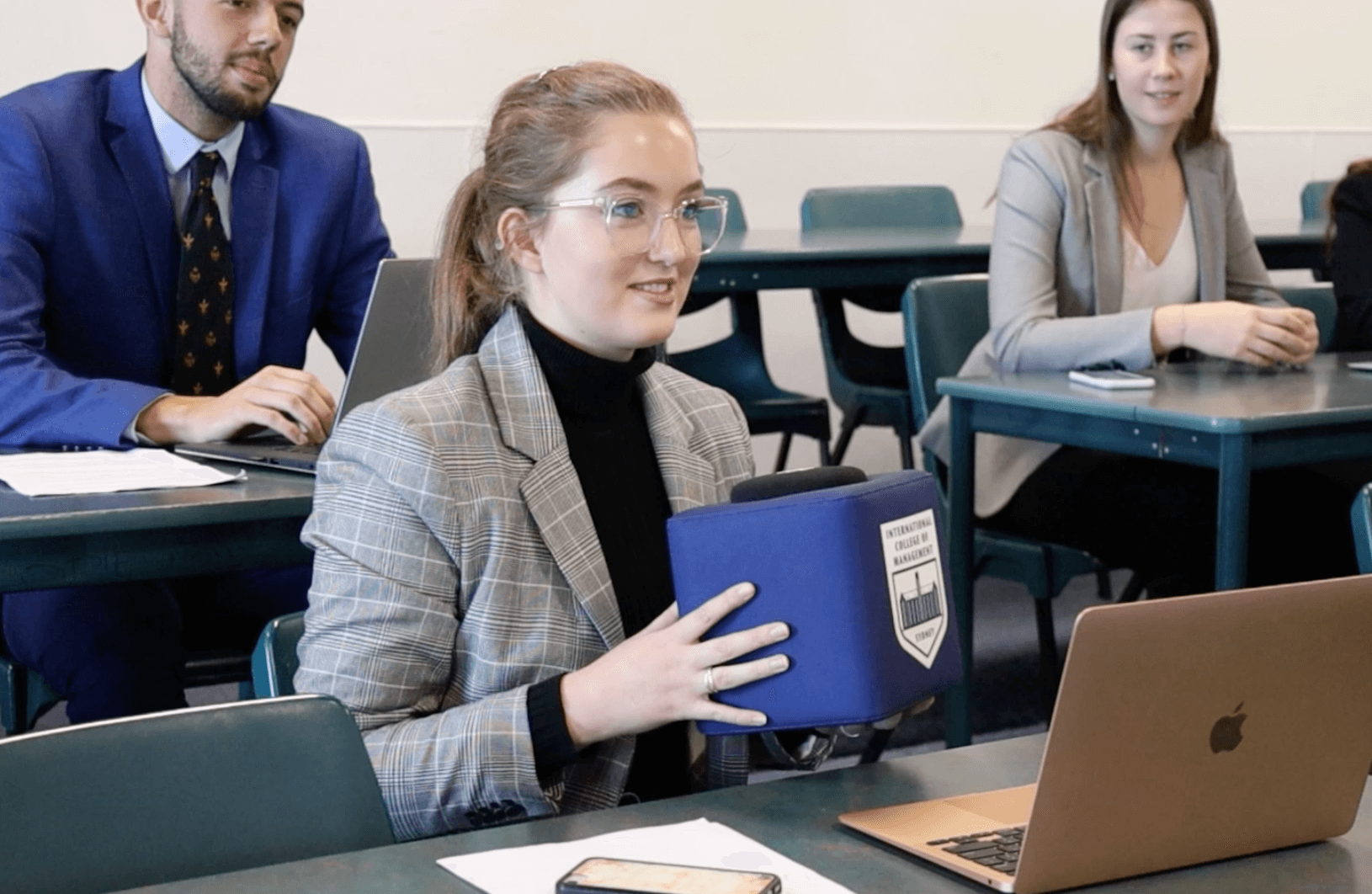
From seminar rooms to lecture halls. Built for university classroom
Learn how Catchbox Plus helps universities capture clearer lectures, discussions, and student questions than ceiling microphones alone.

Measurable impact of using Plus at the University of Rhode island
URI significantly reduced AV support requests and maintenance issues, improving efficiency for the AV team.
FAQ: Ceiling Microphones in university classrooms
- Are ceiling microphones enough for classrooms?
- Ceiling microphones can be enough for basic room coverage in some classrooms, especially flat rooms with predictable seating and good acoustics. But they are usually not enough on their own if the goal is clear lecture capture, hybrid teaching, student Q&A, or assistive listening. The main issue is distance. A ceiling microphone is rarely close to the person speaking, so it can pick up more room noise, echo, HVAC sound, and uneven speech levels. For better audio, universities should usually combine ceiling microphones with a close-proximity instructor microphone, such as a wearable or handheld mic.
- What are common classroom ceiling microphone problems?
- Common classroom ceiling microphone problems include distant or muffled speech, uneven pickup from different seats, room echo, weak audio for remote students, and poor clarity during student Q&A. These problems become more noticeable in larger rooms, lecture halls, and spaces with high ceilings or reflective surfaces. Ceiling microphones can capture the room, but they do not always capture each speaker clearly. That is why microphone placement matters as much as microphone coverage.
- What is the best ceiling microphone alternative for lecture halls?
- A strong ceiling mic alternative for lecture halls is a throwable wireless microphone, such as Catchbox Cube, combined with a close-proximity instructor microphone like Catchbox Clip or Stick. Lecture halls can be difficult for ceiling microphones because students sit at different distances from the ceiling, especially in amphitheater-style rooms. This can make student questions sound uneven or distant. A throwable microphone brings the mic directly to the student who is speaking, improving clarity for the room, remote participants, and recordings.
- Can ceiling microphones and Catchbox Plus work together?
- Yes. In many classrooms, the best setup is not ceiling microphones vs wireless microphones, but both. Ceiling microphones can capture general room discussion, while Catchbox Clip or Stick captures the instructor clearly at close range. Catchbox Cube can also be added for student Q&A when questions need to be heard clearly across the room. Catchbox Hub brings these audio sources together and sends a clean processed output to the classroom computer, conferencing platform, recording system, or voice lift setup.